When the Cargo Hits the Cab
Heavy cargo is supposed to stay put on the trailer until it reaches its destination. At mile marker 391 on I-40 in Knoxville, an 18,000-pound culvert came loose from a tractor-trailer and struck the back of the cab. This Knoxville load recovery job involved getting that enormous piece of cargo back where it belonged before the truck could continue its trip.
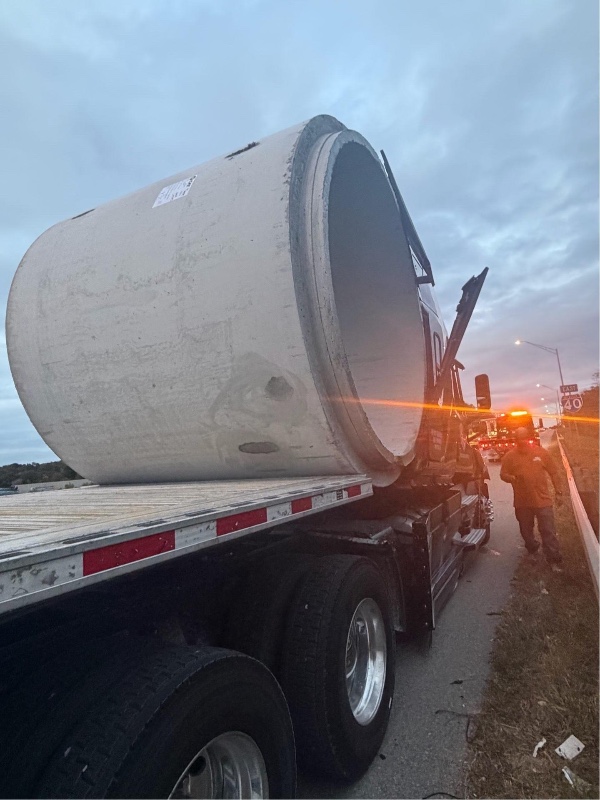
The culvert had damaged the back of the tractor’s cab, and its position created an awkward lifting problem. We couldn’t simply move the truck down the highway with the load sitting where it had landed.
An Awkward Reach Over the Tractor
When cargo shifts toward the cab of a commercial vehicle, the problem isn’t limited to the trailer. In this case, the culvert had made contact with the back of the tractor’s cab and caused damage there.
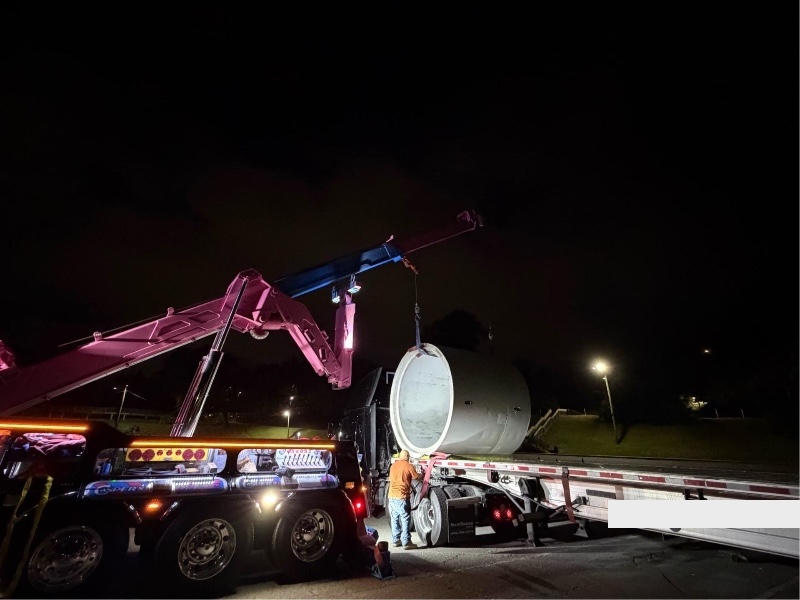
We sent one operator in our Peterbilt 9055XL 50-ton heavy-duty wrecker. Our operator positioned the wrecker in front of the tractor-trailer, along the interstate, so the lifting equipment could reach over the cab. That’s a lot of weight to reach for, especially with the tractor sitting between our wrecker and the trailer bed. But the setup gave us access to the culvert so we could begin putting the load back in place.
The First Lift Was About Getting Off I-40
We reached over the tractor’s cab and lifted the culvert back onto the trailer bed. Then we secured it with straps so the truck could be moved away from the interstate. But this wasn’t the final cargo placement. We needed to get the truck out of its roadside position before taking the time required to put the culvert exactly where it belonged.
Thankfully, TDOT helped us with traffic during the interstate portion of the operation. That assistance was important while we worked with an 18,000-pound load alongside passing vehicles. Getting the culvert back onto the trailer was the first priority. Getting it positioned correctly would come next.
The Second Lift Put the Load Where It Belonged
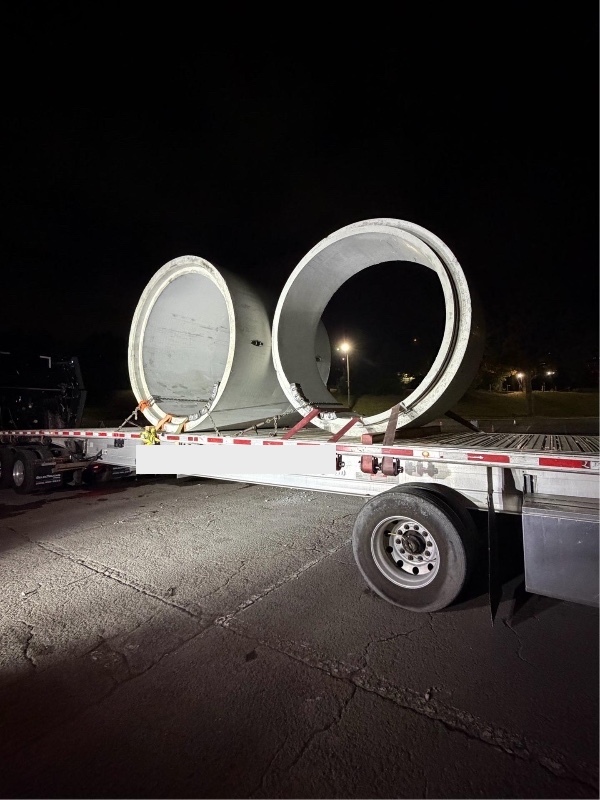
Once the truck was off the interstate, we went back to work on the culvert. This time, we weren’t just trying to get it onto the trailer. We needed to move it into the correct position for transport. We made a second lift, adjusted the culvert’s placement, and completed the repositioning.
For load recovery in Knoxville, the two lifts served different purposes. The first allowed the truck to leave the interstate. The second addressed the cargo’s actual placement.
Trying to accomplish everything in one roadside lift would have kept the operation beside highway traffic longer than necessary.
1 Operator, 2 Lifts, 3 Hours
An 18,000-pound culvert isn’t something we can simply shove back into place. That’s why our I-40 load recovery near Knoxville required several distinct steps:
- Positioning the wrecker: We brought our Peterbilt 9055XL 50-ton wrecker in front of the tractor-trailer.
- Reaching over the cab: We used the lifting equipment to retrieve the displaced culvert.
- Securing the load: We strapped the culvert down after returning it to the trailer.
- Moving off the interstate: We relocated the truck before completing the final adjustment.
- Making the second lift: We repositioned the culvert correctly on the trailer.
One operator handled the entire recovery, and the job took approximately three hours.
The Truck Didn’t Need a Tow
Despite the damage to the back of the cab, the tractor-trailer was still operable when we finished. Once the load had been repositioned, the truck drove away under its own power.
The culvert had created a serious interruption, but after two lifts and three hours of work, the truck could leave without being hooked to our wrecker.
Casper’s Wrecker Service Brings 34 Years of Experience to Knoxville Load Recovery
At Casper’s Wrecker Service, we’ve grown from a body shop founded in 1992 into a locally owned towing, recovery, and transportation company. Jimmy Collins Jr. leads a team that includes in-house dispatchers, mechanics, auto body technicians, and tow truck operators.
Our work includes heavy-duty towing and recovery as well as everyday roadside needs. Having experienced people and heavy-duty equipment available allows us to respond to problems that aren’t solved by a conventional tow.
For commercial load recovery around Knoxville, we look at what needs to be lifted, how the equipment is positioned, and what has to happen before the truck can move again. Sometimes that takes a straightforward recovery. Other times, like this culvert job on I-40, it takes two carefully planned lifts.
FAQ
How much did the culvert weigh?
The culvert weighed approximately 18,000 pounds. Its weight and position required heavy-duty lifting equipment to return it to the trailer.
What equipment did Casper’s Wrecker Service use?
We used a Peterbilt 9055XL 50-ton heavy-duty wrecker. One operator completed the recovery.
Why did the culvert need to be lifted twice?
The first lift returned the culvert to the trailer so the truck could be moved off the interstate. The second lift repositioned the cargo correctly once the truck was away from highway traffic.
Was the tractor-trailer damaged?
Yes. The loose culvert struck and damaged the back of the tractor’s cab.
Did anyone assist with traffic during the recovery?
Yes. TDOT assisted with traffic during the interstate portion of the operation.
Did the truck need to be towed after the culvert was recovered?
No. The truck remained operable and drove away under its own power after the recovery was completed.