A Tank Load That Needed Rotator Control
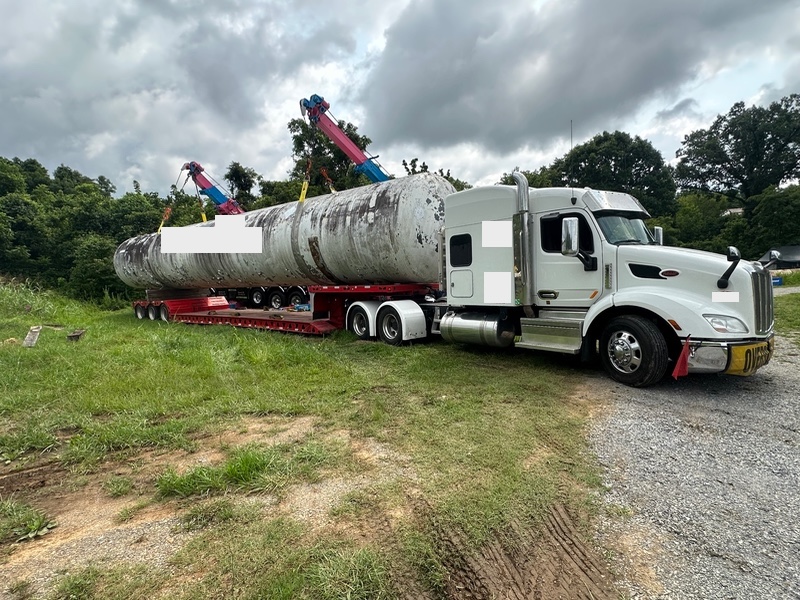
A 78,000-pound purged tank is not the kind of load anyone wants to rush. This job took place in Greeneville, TN, where the tank needed to be lifted so a truck could back underneath it for transport. The weight, the shape of the tank, and the setup space all pointed to Greeneville rotator service instead of a basic winch or lift.
A heavy tank does not behave like a disabled vehicle sitting square on pavement. It can roll, drift, or load one side of the rigging harder than expected if the setup is wrong. Before we moved anything, we looked at the ground, the truck path, the lift points, and where each rotator needed to sit.
Setting the 75-Ton Rotator First
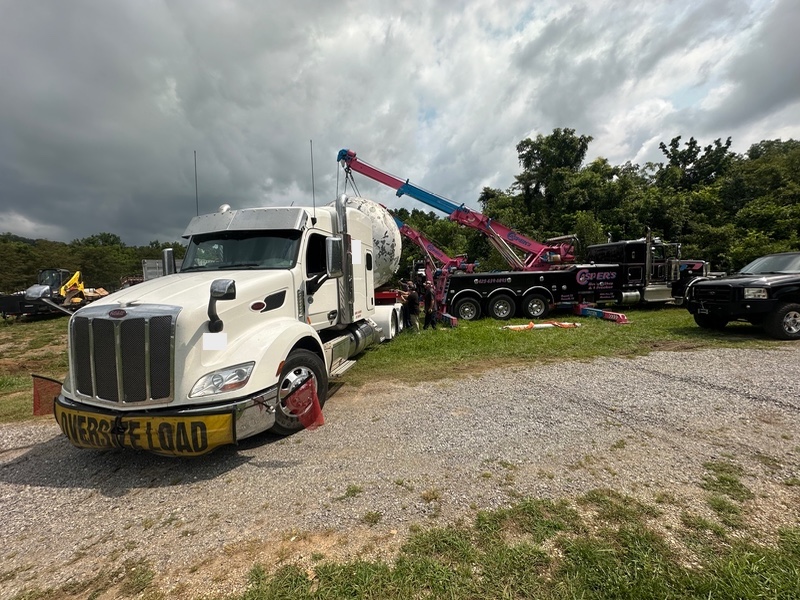
We set our 2024 Peterbilt 1075 75-ton rotator off to the side so it could control the main lift. Outrigger placement mattered here. We cribbed the outriggers to spread the load and support the truck before putting real tension on the lines.
Then we backed our 2023 Peterbilt 1150 50-ton rotator straight in to work with the 75-ton unit. We also had a service equipment truck on scene, giving the crew access to support gear without having to leave the job. Four team members worked the scene, each with a clear role.
Sharing the Load Across the Rigging
We used snatch blocks on both rotators to reduce line tension and keep the pull controlled. We also used 53,000-pound straps on each end of the tank. The goal was to lift the tank evenly enough for the truck to back under it without chasing the load.
The basic sequence was straightforward, but every step needed attention:
- Set the 75-ton rotator to the side
- Crib the outriggers
- Back the 50-ton rotator straight in
- Rig both ends with snatch blocks
- Use 53,000-pound straps on each end
- Lift the tank high enough for the truck
- Hold the load while the driver strapped down
Holding the Tank While the Truck Backed Under
Greeneville rotator service calls like this depend on communication. The operators had to lift, hold, and adjust while the truck backed underneath the tank. Nobody benefits from fast movements when 78,000 pounds is hanging in the air.
Once the truck was positioned, we held the tank steady while the driver secured it. A load like this needs patience during the last few feet. That is usually where small mistakes show up, so we kept the tank controlled until the straps were set and the truck was ready to move.
Getting the Truck Back to Flat Ground
After the tank was loaded and secured, we still had to deal with the truck position. A Greeneville rotator service job can include more than the lift itself, especially when the transport truck needs help getting out of the setup area. We winched the truck out to a flat spot so it could move under its own power.
This Greeneville rotator service took about 3.5 hours from setup to finish. That included positioning both rotators, cribbing, rigging, lifting, holding, strapping, and winching the truck to better ground. For a 78,000-pound purged tank, that is the kind of pace we like: steady enough to control the load and quick enough to keep the job moving.
Casper’s Wrecker Service Handles Greeneville Rotator Service for Heavy Load Work
Casper’s Wrecker Service is locally owned and operated, with five locations and a team that includes in-house dispatchers, mechanics, auto body techs, and tow truck operators. What started as a body shop in 1992 has grown into a licensed and insured towing, roadside assistance, recovery, and transportation company. Our Greeneville rotator service work fits that growth because heavy jobs need the right trucks, the right crew, and a dispatcher who knows what to send.
We handle calls along major Tennessee corridors, including heavy recoveries, truck accidents, transport support, and difficult load work. On this Greeneville rotator service job, two Peterbilt rotators, a service equipment truck, and four crew members gave us the control needed to lift a 78,000-pound tank and get the transport truck moving again. Some jobs are won before the first pull, right there in the setup, the cribbing, and the first few feet of line tension.
FAQs
Why would a crew use two rotators for one lift?
Two rotators can help share the load and control both ends of a heavy object. That matters when the item is long, round, or likely to shift during lifting.
What is cribbing used for under outriggers?
Cribbing spreads weight over a larger area. It helps support the recovery truck when the ground or pavement needs more load distribution.
What does a snatch block do during a lift?
A snatch block can redirect a winch line or reduce strain on the line. It also gives the operator more control over how the load moves.
Why does a tank need to be held steady while a truck backs under it?
The truck has to line up under the load without the tank drifting or rolling. A slow hold gives the driver time to position the trailer correctly.
What information helps before loading a heavy tank?
Weight, length, lift points, ground conditions, and trailer height all matter. Photos of the site and the tank help the crew plan the setup.
Can heavy loads be lifted and loaded without a crane?
Sometimes, yes. Rotators and heavy wreckers can handle certain lift and load jobs when the weight, access, and rigging plan fit the scene.