A Tanker Down Near Thorn Hill
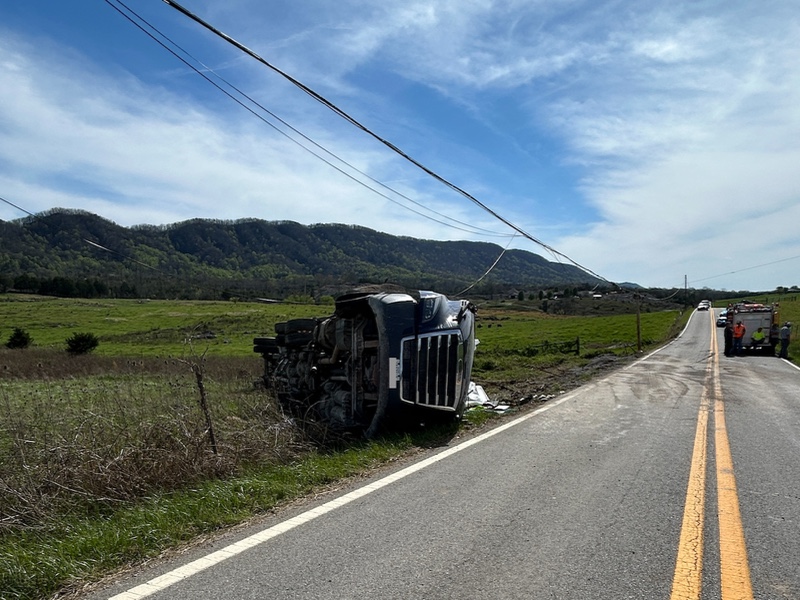
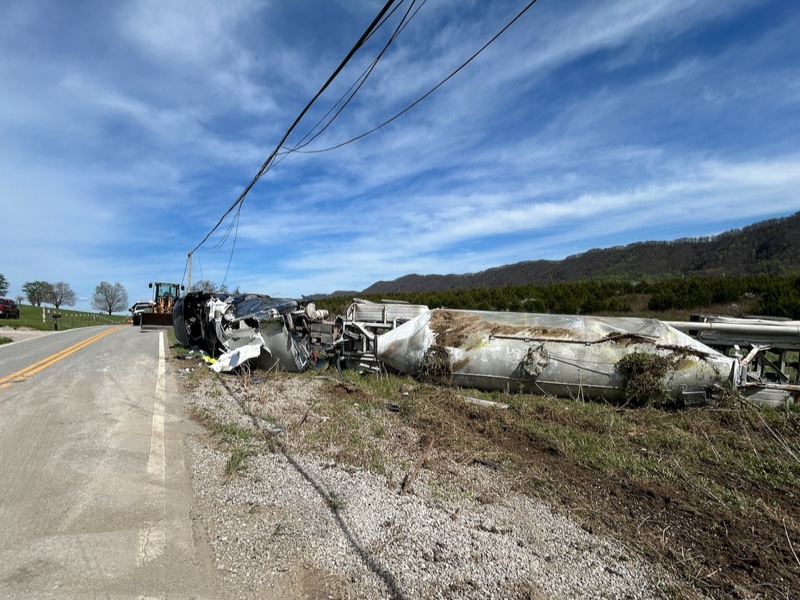
A bulk tanker hauling burnt lime rolled on Hwy 131 in Thorn Hill, TN, with a total weight of about 79,000 pounds. Tennessee Highway Patrol, Tennessee Department of Transportation, and Treadway Volunteer Fire Department responded to the scene. Our crew had about a 45-minute drive in, and this call needed Thorn Hill heavy towing from the start because of the weight, the tanker position, and the recovery space we had to work with.
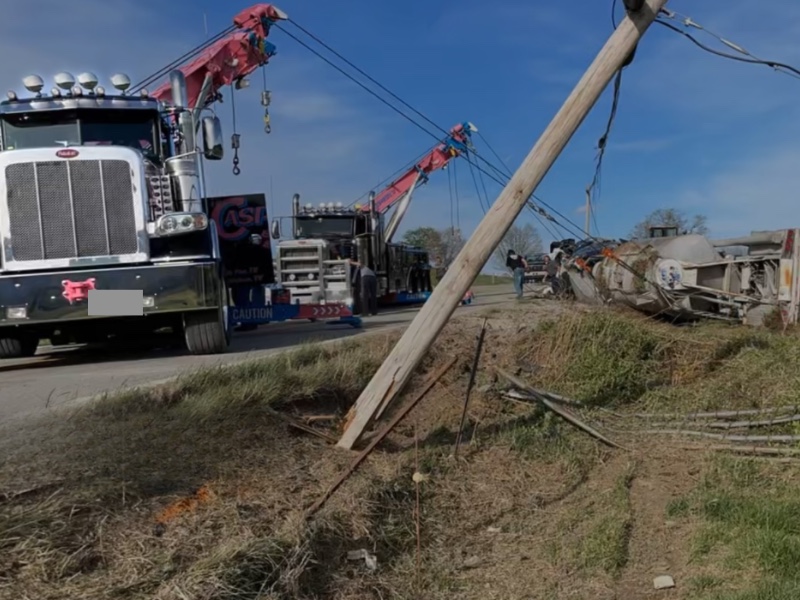
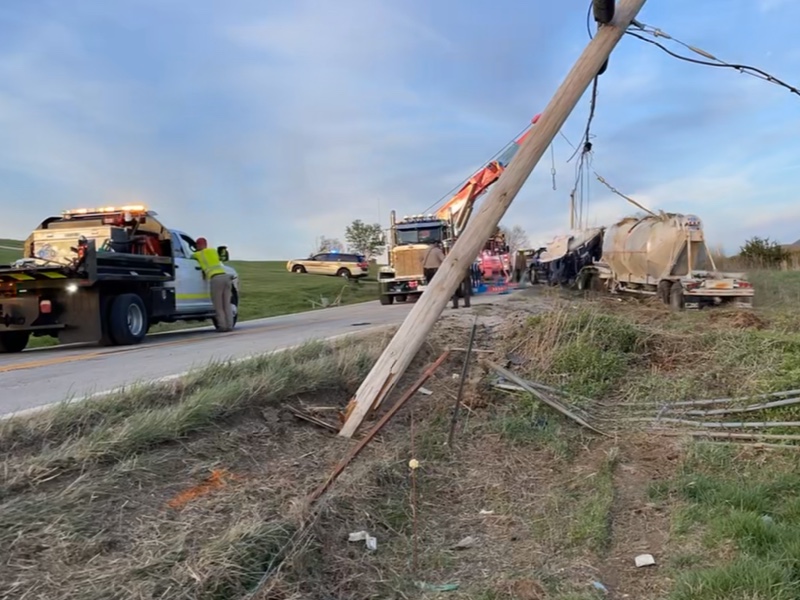
When we arrived, the first job was to slow everything down and look at the full scene. The overturned tractor-trailer sat between our recovery setup area and a fiber optic line. This meant every pull had to be planned before a cable moved. A damaged vehicle can be replaced. A cut fiber line can turn one wreck into a much bigger problem for everyone nearby.
Two Rotators and a Careful Setup
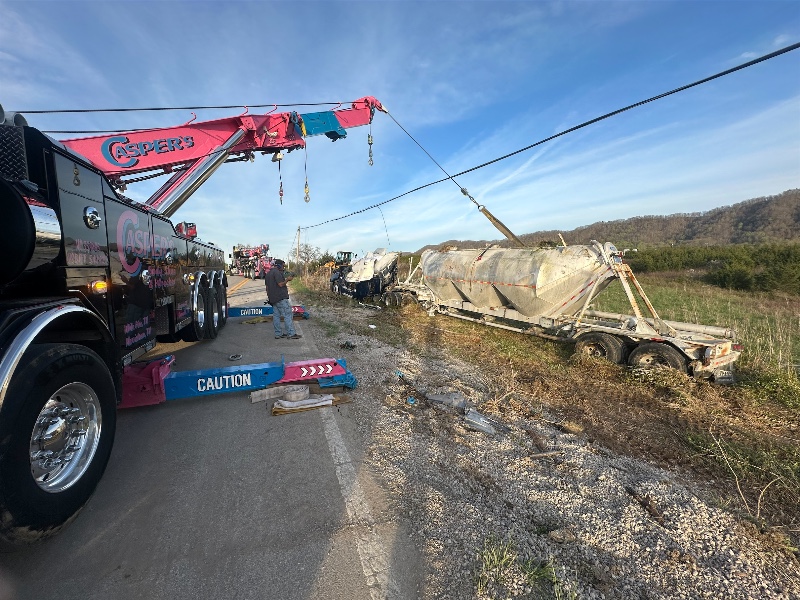
We sent our 2024 Peterbilt 1075 75-ton rotator, 2023 Peterbilt 1150 50-ton rotator, a rollback, a 2020 5130 25-ton wrecker, and a 2021 T800 tri-axle road tractor. Five team members worked the recovery from setup through transport. With a loaded tanker, we wanted lifting control, pulling power, towing support, and a replacement tractor ready once the trailer came upright.
We positioned the 50-ton and 75-ton rotators so both operators could work the tanker without crowding the fiber optic line. That line stayed in the front of our minds the whole time. We checked boom angles, winch line paths, anchor points, and the direction the tanker would move before bringing tension onto the rigging.
Creating Room Before the Upright
The first move was not the roll. We used both rotators to pull the tractor-trailer closer to the roadway, giving the crew enough room to set up the uprighting operation. That extra room mattered because the tanker could not swing or slide toward the fiber line.
Once the unit was positioned better, the rotators worked together to bring the tractor-trailer back onto its wheels. The movement had to stay controlled from start to finish. A loaded tanker reacts differently than an empty trailer, especially with 79,000 pounds involved and damaged equipment already on the ground.
Holding the Trailer While the Tractor Was Moved
After the tanker was upright, the 75-ton rotator stayed connected to stabilize and hold the trailer. The 50-ton rotator then winched the tractor and trailer onto the roadway. For this Thorn Hill heavy towing recovery, the team kept watching the fiber optic line while the unit came up and moved forward.
Once the tractor-trailer reached the road, we separated the tractor from the trailer. The tractor was totaled and needed to be towed by wrecker. The trailer also had to be moved, but it needed a road tractor under it before transport could happen. That is where our T800 tri-axle road tractor came into the plan.
Moving a Totaled Tractor and Damaged Trailer
The 75-ton rotator supported the front of the trailer while the damaged road tractor was removed. Then we backed Casper’s road tractor under the trailer, connected it, and prepared it for transport to our Morristown facility. Thorn Hill heavy towing on this job included recovery, separation, towing, and trailer handling after the crash scene was cleared.
The main sequence looked like this:
- Assess the tanker position and fiber optic line
- Position the 50-ton and 75-ton rotators
- Pull the tractor-trailer closer to the roadway
- Upright the tanker with both rotators
- Hold the trailer with the 75-ton rotator
- Winch the unit onto the roadway
- Separate the damaged tractor from the trailer
- Tow both units to the Morristown yard
At the yard, the 75-ton rotator supported the trailer again while it was disconnected from the road tractor.
Casper’s Wrecker Service: Reliable Thorn Hill Heavy Towing for Tanker and Other Recoveries
Casper’s Wrecker Service is locally owned and operated, and what started as a body shop in 1992 has grown into a fully licensed and insured towing, roadside assistance, recovery, and transportation company. For this Thorn Hill heavy towing call, our in-house dispatchers sent the right mix of equipment because a burnt lime tanker on its side needs more than one heavy truck and a quick hookup.
Our Thorn Hill heavy towing work often involves damaged tractors, loaded trailers, rotator recovery, highway coordination, and transport back to our Morristown facility. This job took about five hours from start to finish, with five crew members, two rotators, a rollback, a 25-ton wrecker, and our road tractor all playing a part. On Hwy 131, the real Thorn Hill heavy towing work was keeping the tanker controlled, protecting the fiber optic line, and moving 79,000 pounds one careful step at a time.
FAQs
Why does a loaded tanker need a careful recovery plan?
A loaded tanker carries weight that can shift during movement. Crews have to control the trailer, tractor, rigging, and ground conditions before trying to upright it.
What makes fiber optic lines a concern during a recovery?
Fiber optic lines can be damaged by winch lines, moving equipment, or a sliding truck. Crews need to know where the line is before pulling, lifting, or repositioning anything.
Why would two rotators be used on one tractor-trailer?
Two rotators can control different parts of the unit at the same time. That helps during uprighting, pulling, and holding a trailer steady after it comes back onto its wheels.
Can a damaged tractor be separated from the trailer after a crash?
Yes, if the trailer can be supported first. A rotator or other heavy equipment may hold the trailer while the damaged tractor is removed.
What happens if the trailer can still be moved but the tractor is totaled?
A recovery crew may use a road tractor to connect to the trailer and move it. The damaged tractor can then be towed separately by a wrecker.
How long does a loaded tanker recovery usually take?
It depends on the damage, weight, road access, cargo, and hazards near the scene. Some jobs take a few hours, while more difficult recoveries can take much longer.