Spilling the Beans on a Loaded Rollover on 11-E
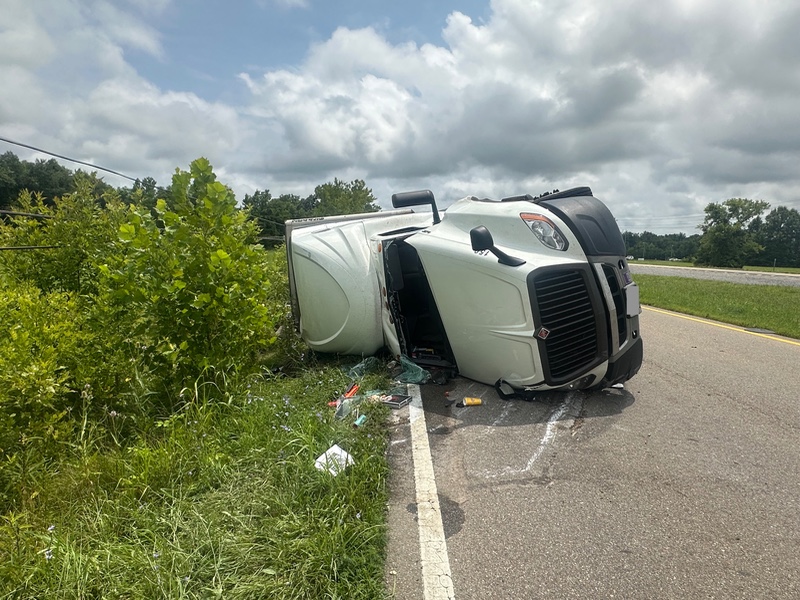
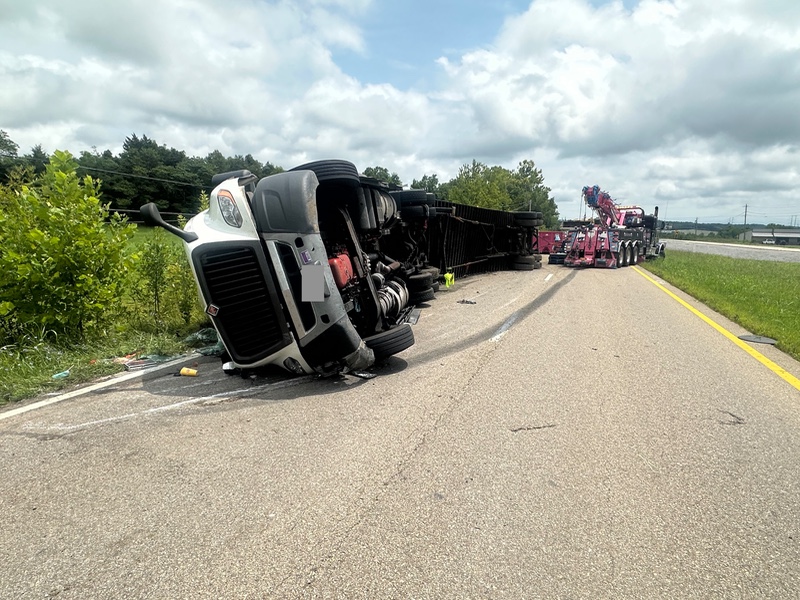
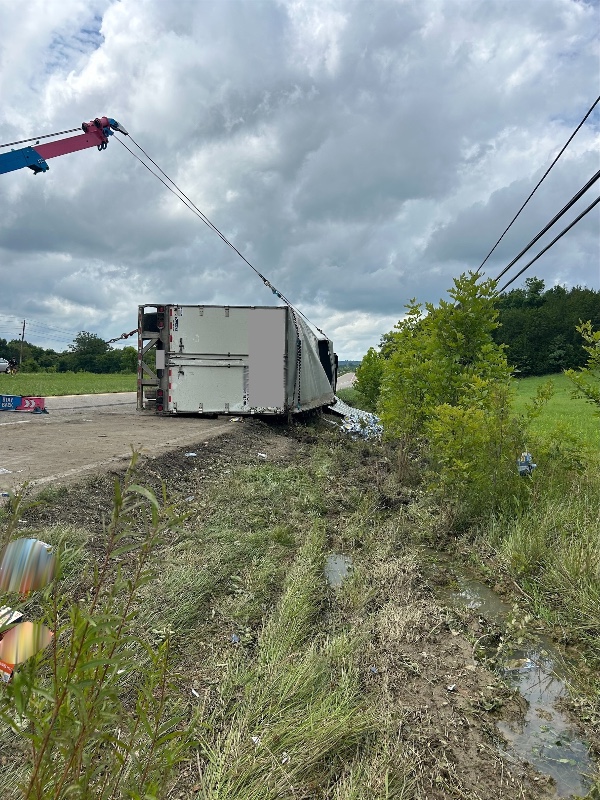
A tractor trailer got off the edge of the road on 11-E at Payne Road in Mosheim, TN, then flipped while hauling 42,000 pounds of canned beans. When our first 50-ton wrecker arrived, the trailer damage was obvious. One sidewall had broken out, the roof had separated from the trailer body, and the load could not stay where it was. This was Mosheim heavy towing with cargo recovery, structural support, and a long cleanup rolled into one job.
A wrecked trailer is hard enough when it stays square. This vehicle had lost major body strength, which meant the trailer could fold or collapse if we pulled it the wrong way. Before calling for the full response, we looked at the slope, the trailer position, the damaged roof, and what it would take to unload the freight.
Calling in the Equipment the Scene Needed
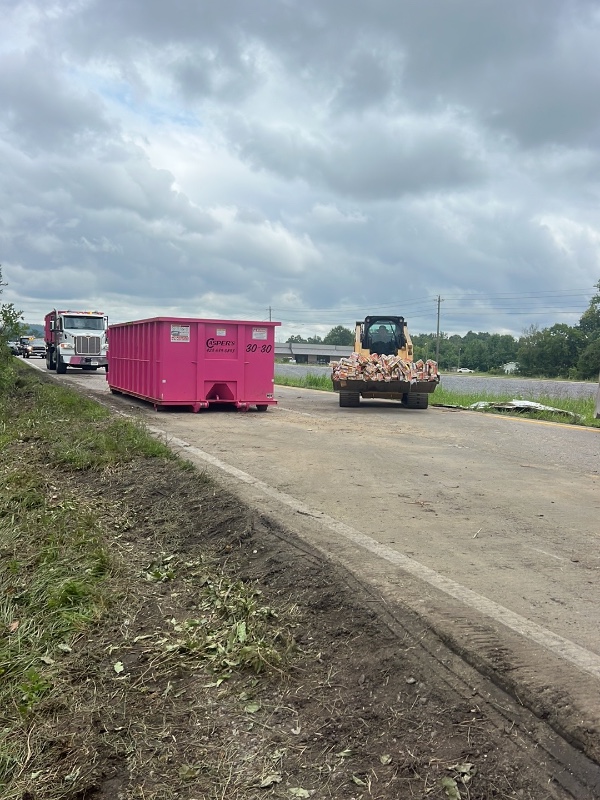
Once we saw the trailer condition, we brought in more help. The response grew to include our 2024 Peterbilt 1075 75-ton rotator, 2023 Peterbilt 1150 50-ton rotator, rollbacks, a tractor with a Traileze float, a CAT excavator, skid steers, a roll-off truck, and three 30-yard roll-off containers. Ten crew members worked the scene.
Mosheim Police Department, Tennessee Department of Transportation, and Mosheim Fire Department also responded. We needed room to work, traffic control, and a way to remove cargo without letting the damaged trailer come apart. The job took about six hours from first response to final transport.
Making Room to Unload the Trailer
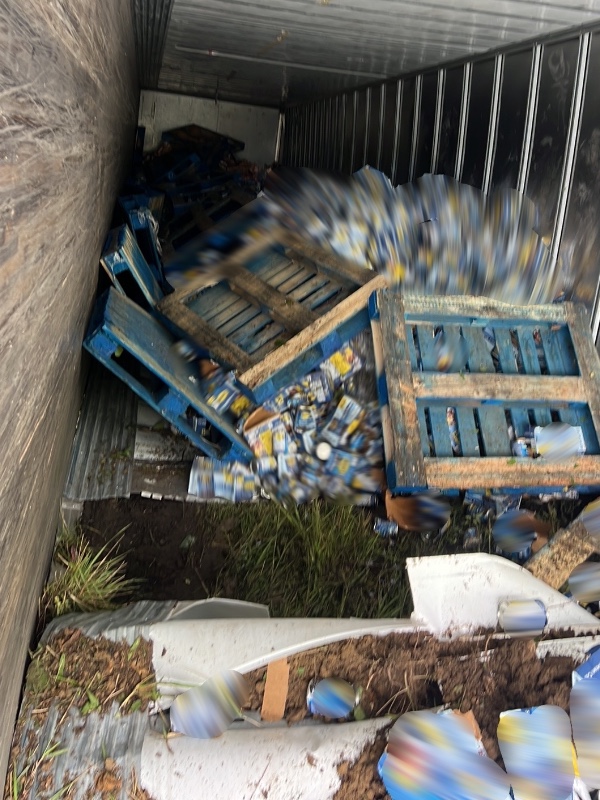
The 50-ton wrecker first pulled the tractor trailer closer to the roadway and onto a more level working area. That gave us better access to the rear of the trailer. Once we had enough room, we opened the rear doors and cut a small section out of the damaged roof so the skid steer could enter.
Then, the unloading came before uprighting. Laborers and the skid steer operator removed canned goods from the damaged trailer and loaded them into the roll-off containers. As each container filled, the roll-off truck hauled it from the scene so the crew could keep working without crowding the site.
Reinforcing the Trailer Before the Roll
The trailer had too much damage to treat it like a normal rollover. Our rigging crew basket-wrapped the underside with heavy chains and binders to help hold the structure together. That reinforcement reduced the chance of the trailer collapsing during recovery.
The 50-ton wrecker held and stabilized the trailer while cargo removal continued. The 75-ton rotator was then positioned to help control both sides of the damaged trailer. On Mosheim heavy towing jobs like this, the pull has to match the trailer’s condition, not just its weight.
Uprighting the Combination Unit
After the remaining cargo was removed, both wreckers worked together to prepare the tractor trailer for uprighting. The empty trailer still needed a careful roll because of the broken sidewall and separated roof. We brought it back onto its wheels in a controlled move, keeping tension steady as the unit came over.
The main sequence looked like this:
- Assess the trailer damage and cargo position
- Pull the unit closer to the roadway
- Cut roof clearance for skid steer access
- Remove canned goods into roll-off containers
- Reinforce the trailer with chains and binders
- Position both heavy wreckers for the upright
- Inspect the tractor and trailer after recovery
- Tow the combination from the scene
That order kept the Mosheim heavy towing work moving without asking the trailer to handle more strain than it could take.
Towing the Totaled Tractor Trailer From the Scene
The tractor trailer was totaled, but it still had to leave the scene as a combination unit. After the upright, we inspected both the tractor and trailer for stability and secured them for transport. The skid steer was loaded back onto the Traileze trailer once recovery operations were finished.
This Mosheim heavy towing job was not quick, but the pace fit the damage. A full load of canned beans, a torn trailer body, loose cargo, multiple agencies, and several pieces of heavy equipment all had to be worked into the same plan. By the end, the cargo was removed, the trailer was upright, and the wrecked unit was towed away.
Casper’s Wrecker Service Handles Mosheim Heavy Towing After Loaded Rollovers
Casper’s Wrecker Service is locally owned and operated, with in-house dispatchers, mechanics, auto body techs, and tow truck operators working as one team. What started as a body shop in 1992 has grown into a fully licensed and insured towing, roadside assistance, recovery, and transportation company. For this Mosheim heavy towing call, our dispatchers sent the wreckers, rotators, rollbacks, loading equipment, and crew needed for a loaded trailer recovery.
Our Mosheim heavy towing work can involve damaged tractors, torn trailers, cargo removal, rotator recovery, and transport after a crash. This one took ten people, two major wreckers, skid steer support, roll-off containers, and six hours beside 11-E at Payne Road. Sometimes the hardest part of a rollover is not getting it upright. It is getting the load out before the trailer gives up.
FAQs
Why does cargo sometimes need to be removed before a trailer is uprighted?
Cargo adds weight and can shift during the recovery. Removing it helps reduce stress on the trailer and gives the crew more control during the upright.
What are roll-off containers used for at a crash scene?
Roll-off containers can hold damaged cargo, broken packaging, and debris. They keep the scene cleaner and give the crew a place to load material as work continues.
Can a badly damaged trailer still be towed?
Sometimes, yes. The crew has to inspect the frame, suspension, wheels, and body structure before moving it. If it can be secured, it may be towed as a combination unit.
Why would a skid steer be used inside a damaged trailer?
A skid steer can move heavy or scattered cargo faster than hand labor alone. It can also work in tight spaces when the trailer is opened enough for access.
What should a driver report after a loaded trailer rolls over?
Report the exact location, cargo type, cargo weight, trailer damage, leaks, and lane blockage. Photos help if they can be taken from a safe spot.
Who helps manage traffic during a major truck recovery?
Police, fire crews, or transportation officials may help with lane control and scene access. The recovery crew focuses on the truck, cargo, equipment, and cleanup.